A recipe total describes all the food made. A meal entry describes the part eaten at that meal. Keep those records separate so saving a batch does not accidentally add the whole recipe to today’s intake as well as tomorrow’s leftovers.
Create a recipe record before meal entries
Record ingredients and amounts once, using labels or suitable database entries. State the energy unit used throughout. Save a batch name or date so you can tell this version from a later recipe with different ingredients.
A recipe calculation is an estimate. Unmeasured oil, discarded cooking liquid or an uncertain ingredient amount can affect it. Preserve those limitations rather than reporting more decimal places.
Allocate the actual finished yield
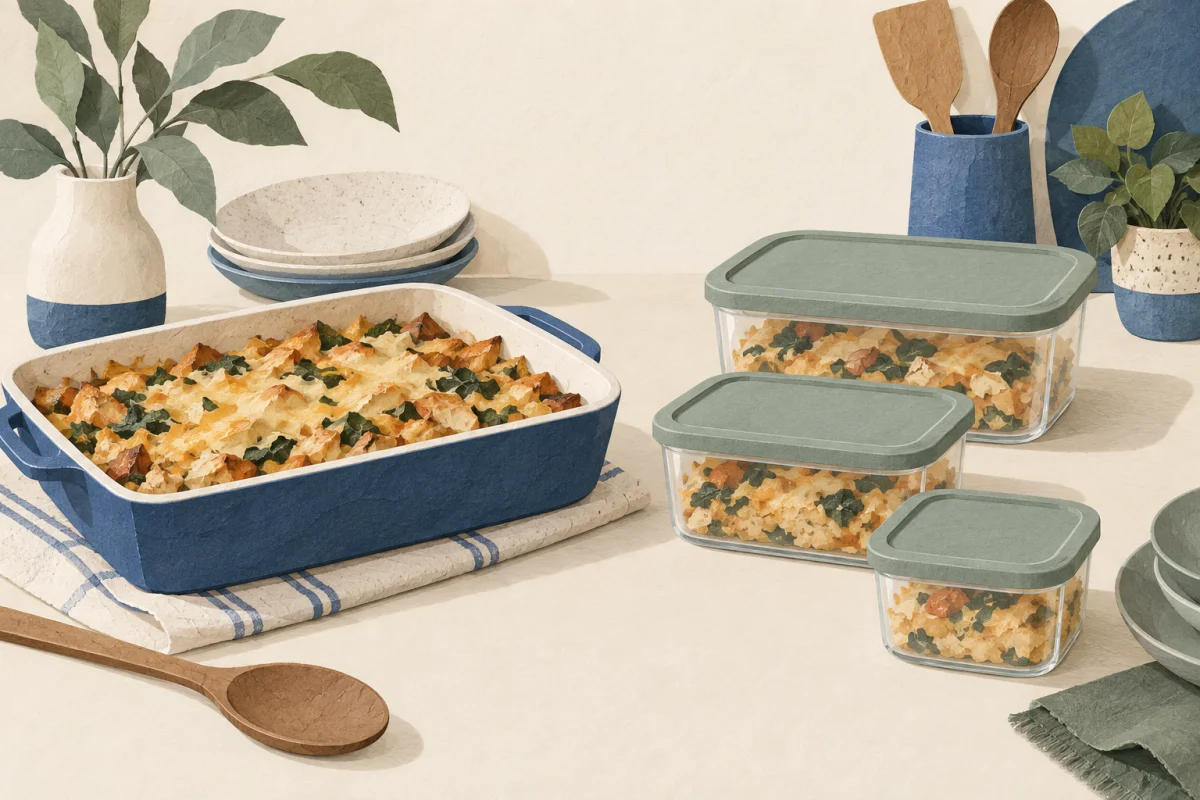
Divide the batch into equal portions if they are genuinely equal. Otherwise use a reasonable weight-based allocation for a reasonably uniform mixture. Subtract the empty container when weighing. A layered dish or uneven distribution of ingredients may not divide proportionately by weight.
| Destination | Share of 1,200 g batch | Share of estimated 1,800 kcal |
|---|---|---|
| Dinner portion | 300 g | 450 kcal |
| Second dinner portion | 300 g | 450 kcal |
| Leftover container A | 400 g | 600 kcal |
| Leftover container B | 200 g | 300 kcal |
The four allocations add to 1,200 g and 1,800 kcal. Saving “recipe: 1,800 kcal” in your recipe library is not another meal. On the day you eat container B, record its 300 kcal estimate once, not the entire batch again.
Track changes after portioning
If you add cheese to one serving, put that addition on the serving entry. If two people split a leftover container, divide that container’s allocated amount, not the original whole recipe. Record discarded food as a change in what was eaten rather than pretending every prepared portion was consumed.
For an unknown share, a descriptive meal note remains useful. A forced exact allocation can be less informative than an honest estimate.
Audit the record before interpreting a daily total
Check that the recipe is stored as a recipe, meals refer to the right batch and portions are not duplicated by both a saved meal and its ingredients. Keep preparation date and eating date distinct. This is an accounting method, not a recommendation to weigh every meal.
The food-log guide explains how to label estimates. If numerical logging becomes distressing or conflicts with an eating-disorder care plan, use the approach agreed with your professional team instead.
What if you eat only part of a leftover container?
Keep the container’s assigned amount as a reference and record the fraction or weight actually eaten, if known. For example, eating half of the 200 g container in the table allocates half of its 300 kcal estimate, or 150 kcal. The remaining half is still unconsumed. If the contents are uneven or the portion is only guessed, retain that qualification rather than making the fraction look measured.
Use the free resources
The calories resource page has related guides and tools. Use paper if that is easier; the article’s worksheet does not require an account or an app. Keep personal notes on your own device and share only the information needed for your question.
Sources & checks
- FDA: understand the Nutrition Facts label ↗
Nutrition amounts use the stated serving basis. The recipe, portion and comparison calculations are original arithmetic examples, not measurements of real foods.
- USDA FoodData Central: data and food descriptions ↗
Food identity, preparation and data source matter when selecting a database record; not a personalized diet recommendation.
Checked against these sources on 2026-09-30. Source and editorial check: September 30, 2026. Worked examples and worksheets are original illustrations. This is not clinician-reviewed medical advice. This is educational content, not individual medical advice or a clinician-reviewed treatment plan.
Our editorial process · Suggest a correction