Keep both sets of readings and their conditions. Differences between home and clinic measurements deserve review; they do not prove that one location or device is correct. Bring your home monitor and complete record to your clinician.
A difference is a question to investigate
The American Heart Association describes white-coat hypertension as high readings in the clinic that are not high outside it. The opposite setting pattern can also require assessment. These terms are clinical interpretations of an appropriate measurement record, not labels to assign after comparing two isolated numbers.
Do not discard a high reading as anxiety simply because another reading was lower. Follow your care plan for concerning readings or symptoms, and seek emergency help for chest pain, severe breathlessness or stroke symptoms rather than spending time reconciling the log.
Compare the way the readings were taken
Write down the device, cuff, arm, position and setting for each set when known. Ask for the actual clinic readings instead of relying on a remembered description such as “a little high.” Leave unknown technique details blank.
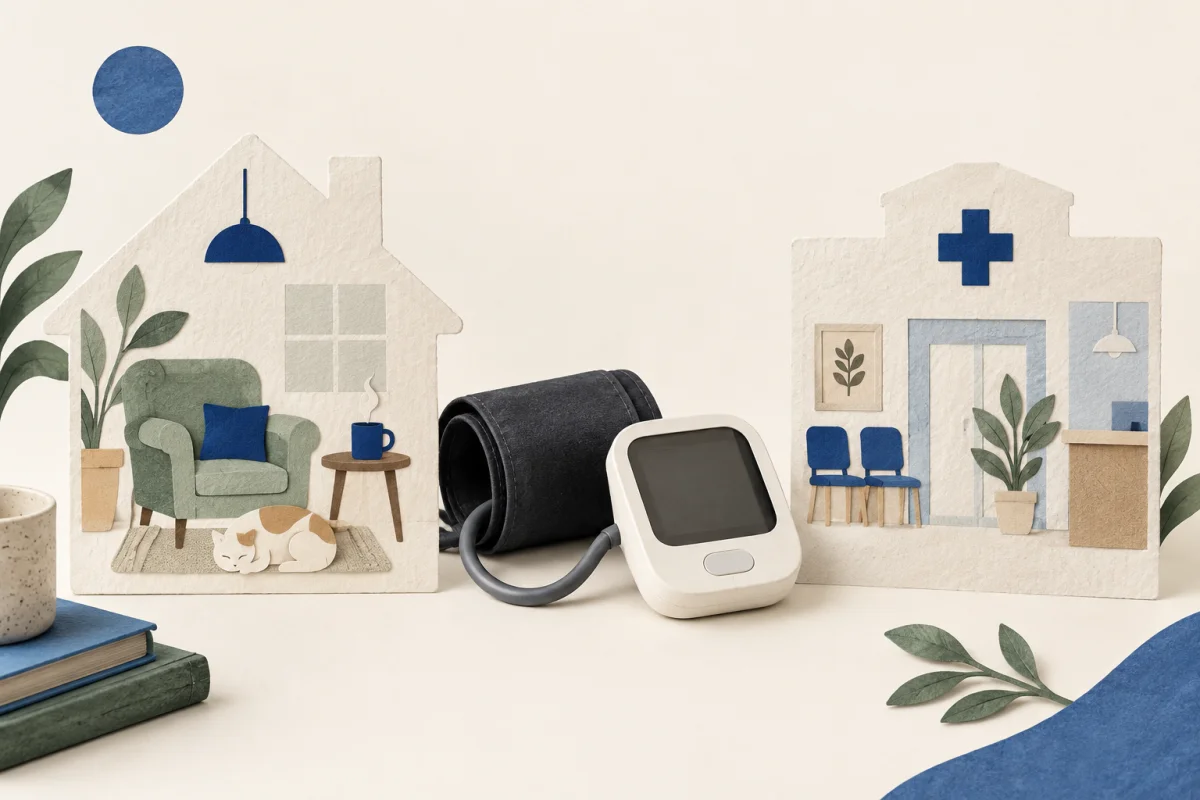
AHA home-monitoring advice includes taking the monitor to an appointment so the healthcare professional can check its use and compare it with office equipment. Bring the cuff too; a device without its cuff does not reproduce your home setup.
| Home record | Clinic record |
|---|---|
| Monitor model and cuff | Clinic device details if available |
| Dates, times and all readings | Date and actual recorded values |
| Arm and position used | Arm and position if recorded |
| Rest or activity context | Known preparation context |
| Technique questions | Professional’s suggested comparison plan |
Keep all readings in the agreed series
Choosing the lowest home result and highest clinic result exaggerates a discrepancy. Keep the full series requested by your clinician, including repeat readings and notes about interruptions. Do not keep retaking measurements solely to obtain a preferred number.
Ask the clinician which home schedule to use and whether additional monitoring is needed. If they request an average, ask which readings should be included. An average made from a different schedule can answer a different question.
Illustrative visit note: “I brought the home device, cuff and the full week requested. The clinic record and home series look different to me. Could you check my technique and explain what comparison or monitoring you want next?” No invented blood-pressure values or diagnostic threshold is needed.
Record the plan after the comparison
Write down whether the clinician identified a technique issue, requested more measurements or made another recommendation. Keep that explanation with the records. Do not add a fixed correction to all home values unless your clinical team specifically directs how to handle the device.
Our cuff-fit guide and paired-reading guide address measurement preparation. The appointment PDF can hold the comparison questions. The optional tracker organizes readings; it does not verify the monitor or decide medication changes.
Sources & checks
- American Heart Association: Home blood pressure monitoring ↗
Monitor comparison, technique and clinical follow-up.
- American Heart Association: Monitoring blood pressure at home ↗
Home/clinic differences and white-coat pattern.
- Current App Store listing: Blood Pressure Tracker° ↗
Public US listing checked September 30; recording or sound features only, not evidence of health benefit.
Checked against these sources on 2026-09-30. Examples and worksheets are original illustrations, not real patient histories or clinical validation. This is educational content, not individual medical advice or a clinician-reviewed treatment plan.
Our editorial process · Suggest a correction