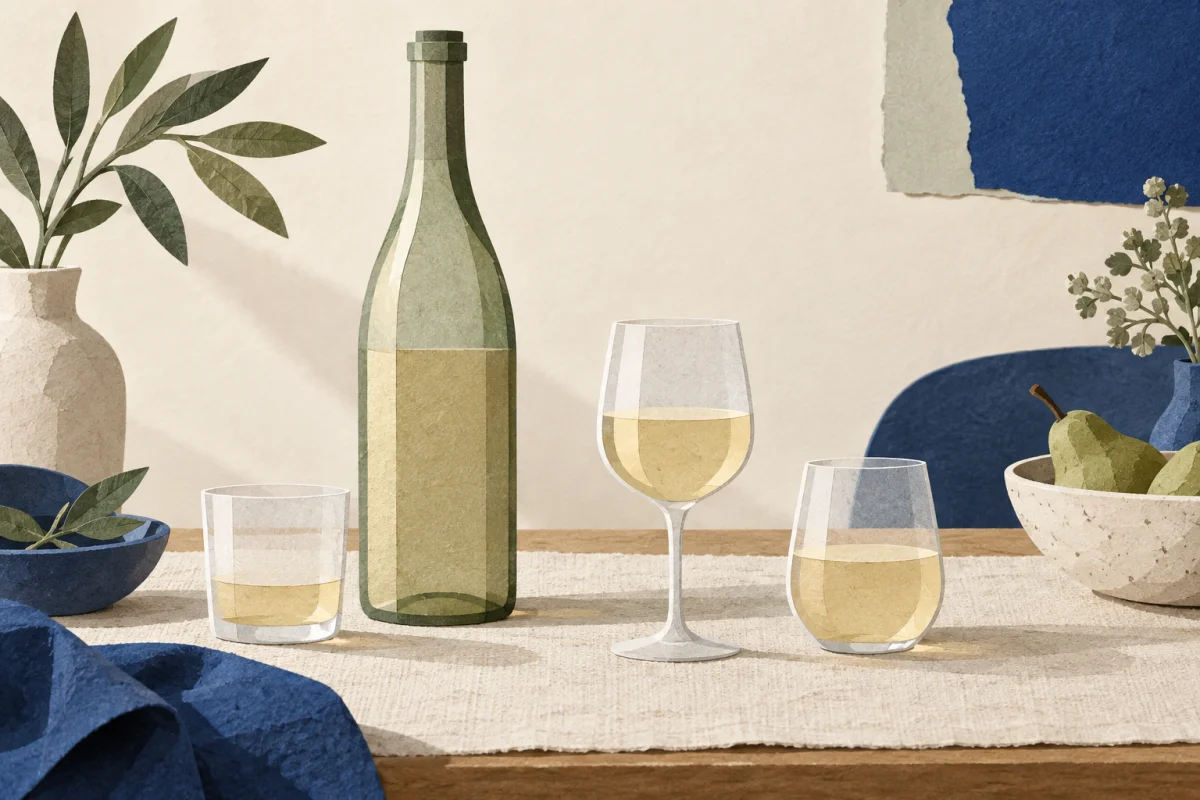
A shared bottle is a container record, not automatically one person’s intake. Record the amount you drank and keep the bottle size and strength as supporting information. Equal division only makes sense if the shares were actually equal.
Choose the evidence for your share
The most useful starting point is a known pour size or a clear fraction of a known bottle. Write whether the quantity was measured, remembered approximately or inferred. The bottle’s alcohol by volume belongs with the record even when the consumed amount is uncertain.
Do not divide by the number of people just because everyone had a glass. Different pours, refills and leftover drink can make that calculation misleading.
Reconcile the bottle without forcing an exact answer
For a simple check, account for your pours, other known pours and the remainder. A mismatch is a reason to label uncertainty, not to adjust everyone’s amount until the numbers look tidy.
| Item | Volume |
|---|---|
| Bottle at start | 750 mL |
| Your two known pours | 125 mL + 125 mL |
| Your recorded amount | 250 mL |
| Remainder and other people’s pours | Not recorded individually |
Your 250 mL is one third of the 750 mL bottle. At 12% ABV it contains 30 mL of pure alcohol by volume. In the UK unit system that is 3 units. It is not 3 US standard drinks; the systems use different definitions.
Handle uncertain refills openly
If a glass was topped up before it was empty, the number of glasses is not a reliable measure of volume. A note such as “two partial pours, volume unknown, bottle 12% ABV” preserves what you know. Do not enter zero just because the calculator needs a number.
An estimate can be recorded as an estimate, with its basis. Keep it separate from measured entries when reviewing a total; a total containing unknown amounts is incomplete.
Keep the calculation in its proper role
This arithmetic cannot establish a safe amount to drink, fitness to drive or the time alcohol will leave your body. It also does not turn a precise record into a health assessment. Use volume and strength fields to keep the original information available for a healthcare conversation.
If you drink regularly and may be dependent, seek medical advice before abruptly stopping or sharply reducing alcohol, because withdrawal can be dangerous. Do not use the diary as a withdrawal plan.
What if the bottle was already open?
Use the amount available at the start of the occasion only if you know it. The original bottle capacity does not reveal how much remained. A bottle that began partly full and ended empty cannot be allocated accurately by dividing its original capacity among the people present. Keep known pours and mark the rest uncertain; the empty bottle is not evidence of your personal share.
Use the free resources
The alcohol resource page has related guides and tools. Use paper if that is easier; the article’s worksheet does not require an account or an app. Keep personal notes on your own device and share only the information needed for your question.
Sources & checks
- NIAAA: What is a standard drink? ↗
Alcohol quantity depends on volume and strength; a US standard drink represents 14 grams of alcohol.
- NHS: calculating alcohol units ↗
UK units equal volume in mL multiplied by ABV percentage, divided by 1,000.
- NHS: alcohol support ↗
Alcohol dependence and withdrawal require appropriate medical support.
Checked against these sources on 2026-09-30. Source and editorial check: September 30, 2026. Worked examples and worksheets are original illustrations. This is not clinician-reviewed medical advice. This is educational content, not individual medical advice or a clinician-reviewed treatment plan.
Our editorial process · Suggest a correction