Saturated fat and dietary cholesterol are different components of food. A low or zero cholesterol number does not tell you the saturated-fat amount. Read both entries on the same portion basis and discuss your overall eating pattern with your care team.
Separate the food components from the blood result
Dietary cholesterol is cholesterol in food. Saturated fat is a type of fat. Neither label value is a measurement of LDL cholesterol in your blood. The American Heart Association explains that saturated fat can raise LDL cholesterol and emphasizes the overall dietary pattern.
This does not create a formula that predicts your blood result from a meal. A food diary can describe choices, while blood tests and clinical assessment answer different questions. Personal nutrition advice may depend on your medical history and circumstances.
A plant source does not answer the saturated-fat question
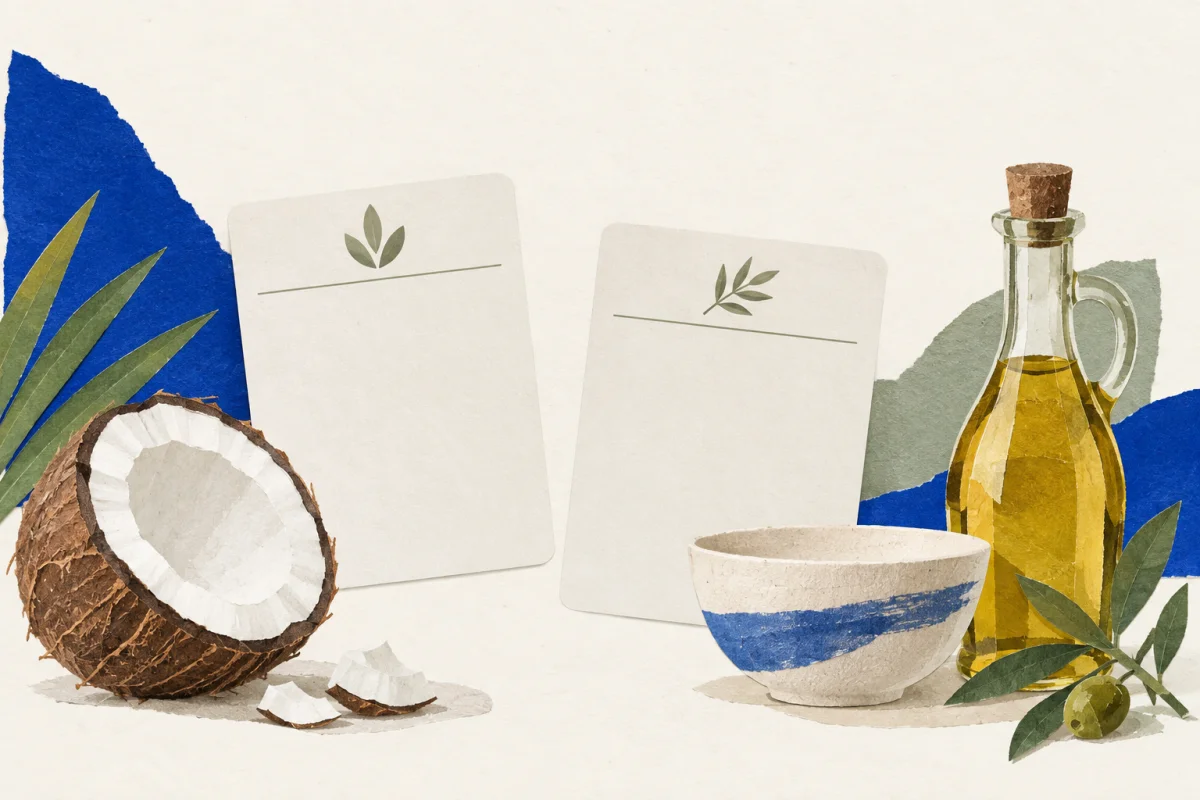
AHA information identifies coconut and palm oils among plant oils containing substantial saturated fat. Consequently, “plant-based” or a cholesterol-free claim does not by itself tell you that a food is low in saturated fat. Check the panel instead of inferring the amount from the front label.
Equally, one nutrient does not establish whether a food fits someone’s entire eating pattern. Consider the question you are comparing and any allergies, preferences or professional advice relevant to you. Avoid turning a single label entry into a moral judgment about a meal.
Put the two rows beside each other
Use the same food quantity for both components and retain their units. US panels commonly show saturated fat in grams and cholesterol in milligrams. Do not add the values into a combined score: they are different components as well as different units.
| Product | Saturated fat | Dietary cholesterol |
|---|---|---|
| Food A | 7 g | 0 mg |
| Food B | 2 g | 20 mg |
Explain what the comparison can show
In this fictional example, A has less dietary cholesterol but more saturated fat than B. You cannot rank the two as universally healthier by selecting only the row that favors one. You also cannot use the difference to calculate a future LDL result.
If you record a different portion, scale each row separately using the same multiplier. For half the stated portion of A, the label-based estimate would be 3.5 g saturated fat and 0 mg dietary cholesterol. Those are recording calculations, not suggested portions or personal targets.
Original question for a dietitian: “I focused only on the cholesterol row when choosing this product. Could we look at saturated fat and my usual meals together, and agree which details are useful to record?”
Use a short record to support the broader discussion
Bring a few representative meals and their preparation details if a clinician or dietitian requests a record. Include the source for packaged-food estimates and mark restaurant values uncertain. There is no need to invent a complete nutrient analysis when you only know a food description.
The food-versus-blood guide explains the measurement distinction. The preparation tool can organize questions, and the free log records food context. Cholesterol Tracker+ tracks dietary information; it does not measure blood lipids or prescribe a personal intake.
Sources & checks
- American Heart Association: Saturated fats ↗
Saturated fat, LDL and plant-oil examples.
- American Heart Association: Dietary cholesterol and a healthy diet ↗
Dietary cholesterol versus saturated fat and overall eating patterns.
- Current App Store listing: Cholesterol Tracker+ ↗
Public US listing checked September30; recording or sound features only, not evidence of health benefit.
Checked against these sources on 2026-09-30. Examples and worksheets are original illustrations, not real patient histories or clinical validation. This is educational content, not individual medical advice or a clinician-reviewed treatment plan.
Our editorial process · Suggest a correction