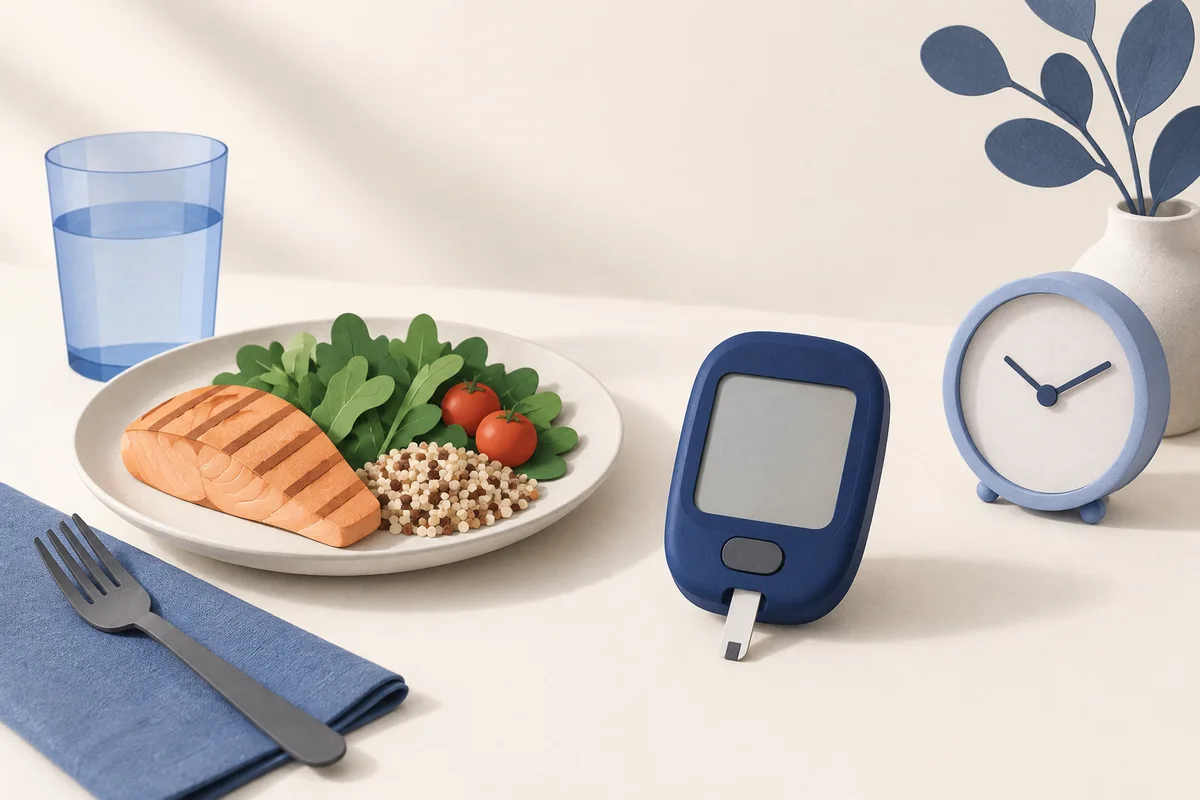
Write the glucose value exactly as your device shows it, include the unit, and describe its timing relative to meals when relevant to your care plan.
A value needs a unit
A glucose result without mg/dL or mmol/L is incomplete. Record the unit with every row, especially if you use more than one device or copy older records. Keep an original record before doing any conversion.
The NIDDK recommends recording the date, time, result, and relevant context, such as food and activity. Your care team should set your testing schedule and personal target range.
Be precise about meal timing
“After lunch” can mean several different things. If your care team has asked for a timed measurement, record the meal start and measurement time. Write “time unknown” when that detail was not captured.
Use the notes field for a relevant change, such as a delayed meal or an unusual activity. You do not need to turn every reading into a full food diary.
If your care team also asks for food records, keep the definition clear in a carbohydrate log.
Entry structure: 14:15 — [device result] — [unit] — lunch started 12:30 — walk after lunch. Use your own actual result; the brackets are fields, not recommended values.
Keep different data sources identifiable
A finger-stick reading and a continuous glucose monitor record come from different methods. Label the device or source instead of mixing unlabeled values. Follow your device instructions and care plan when readings do not match how you feel.
For a visit, send the original export when available. A manually copied log can be helpful, but it should not imply that you captured every measurement.
Bring questions, not a self-made dose change
Circle recurring situations you want to discuss and list any gaps in the record. “These are the readings I captured before breakfast” is clearer than a claim that a handful of results represents your whole day.
This website does not calculate insulin doses or diagnose diabetes. If you have symptoms or results covered by your urgent-care plan, act on that plan rather than waiting to review a chart.
Sources & checks
- NIDDK: managing diabetes ↗
Recording glucose measurements with time and context, and agreeing individual targets with a care team.
- Current App Store listing: Blood Glucose Tracker+ ↗
Checks the companion app’s stated features and its limitations; not independent evidence of health benefits.
Checked against these sources on 2026-09-20. The worked examples and record layouts are original illustrations. They are not real patient records or evidence of treatment effectiveness. This is educational content, not individual medical advice or a clinician-reviewed treatment plan.
Our editorial process · Suggest a correction